
There he goes, counting blades of grass again. Yes, literally. Day after day, patch after patch, no blade is safe from Finkel’s watchful eye! Finkel is…strange, to say the least. He possesses a mathematical talent that few have, along with a myriad of benefactors that, having recognized his potential, offer him support, prestigious positions, and the ability to collaborate with the finest minds on the most interesting and pressing problems. Finkel, however, has more important plans: He just really, really, wants to count blades of grass. He devotes no time to deliberating about what to do, what life to live, and who to become: if there’s grass to count, the answer is clear. Finkel lives his life like this, incredibly successful at spending each and every moment counting grass, to his desire’s fullest, while being completely satisfied with his decisions and never coming to regret them, despite knowing the peculiarity of his behavior and the plethora of different lives he could lead. The simple fact is, nothing else appeals to him as much.
How would you evaluate Finkel’s life? Is it good? Is it valuable? Is it meaningful? Is it high in moral value? in achievement? in realizing one’s potential? in knowledge? in social connection? in…you get the point. The answer to at least some of those questions is clear, but what about whether it’s good for him? What do we mean by that?
Narrowing Down the Evaluative Axis: Was It Good for Him?
There are an enormous amount of dimensions by which to evaluate things: actions, states of affairs, objects, etc. But, in this post, I want to concentrate on a specific evaluative axis, roughly: what’s good for Finkel, what’s a good life for Finkel, what things make Finkel better off, what’s in his self-interest, and so on.
This specific way of evaluating is captured by the concept of prudential value, a specific type of value or “goodness”. Prudential value captures what’s good for a person. It’s what we aim for when we try to benefit someone, act for their sake, or when we deliberate about how to live so that our lives go well for us. It’s one of the things typically considered when figuring out what options, experiences, pursuits, or kinds of lives to live. This is a narrower concept than what is “good” or what’s a “good” life; It’s about what is good or valuable relative to a person.
To flesh the concept of prudential value out a bit more, let’s analyze some scenarios. Consider the situation where there’s a burning house with a baby trapped inside. Let’s stipulate that it’s morally good, whether in a supererogatory or obligatory sense, to go inside and save the baby. However, doing so will leave you with burns that will make the rest of your life difficult: it’ll be harder to form relationships and harder to earn a living; You’ll experience dependence and benefactors that give grudgingly and thereafter humiliate you for it; you’ll experience greater pain of various types; the dreams that you had will go unfulfilled. I think most would submit that the life where you run into the house is higher in moral value, but lower in prudential value, relative to the other life. That isn’t to say that therefore one life is better overall, or that one should necessarily pick one life over the other, but only to say there’s a distinction to be made in the value that is maximized in each life and the dimensions along which we can rate it. The concept of prudential value is thus differentiable from other types of value/goodness/evaluative axes. One thing worth noting is that evaluative axes need not be mutually exclusive or zero-sum, though they can be. That’s why I mentioned that one life was lower in prudential value, not that it was devoid of it, and likewise with moral value.
Let’s take another stab at making the concept yet clearer. Consider the description of the following life, of another Finkel
Finkel was born in the late 1800s, to a family of coal miners in England. His parents were overjoyed at his birth. How could they not? A smiling, bubbly, bright eyed child. Their very own! A son they were determined to love and raise to his fullest potential, for his own sake and in the hopes he would carry the family to a brighter future. As circumstance would have it, and not much different than the rest of his cohort, Finkel started working in the local coal mine when he was 6. Long hours spent in unsafe conditions and breathing soot gave him black lung by the age of 10. The poor diet consisting mostly of stale bread and potatoes left him malnourished, and stunted his growth both physically and mentally, but not to the point where he was blissfully ignorant of his predicament. Nonetheless, he was fit enough to fight in ww1 and was drafted along with his two brothers, with whom he shared an incredibly tight bond. Relief washed over him when he realized one of them was sent to a more peaceful front, even though that meant he was relegated to the more dangerous one. Their assignments gave Finkel hope of a happy reunion when all this was over. It was only a short few months before he got the news that his brother was killed. There would be no reunion. Indifferent, the war labored on, with Finkel enduring various injuries, a combination of his courage and valor, along with the unpredictable chaos of battle. Finkel and his remaining brother managed to survive till the end and went back to England, looking to enjoy a dull, but welcomingly peaceful, life of arduous coal mining. It felt like no time had passed before another war broke out. After a few more years and troop shortages, Finkel and his remaining brother were sent off to fight in France. Though Finkel and his brother were separated throughout, it was only a short while before allied forces were evacuated from France in Dunkirk. Surely, Finkel thought, his brother had also made it out alive. As you might have come to expect, his brother had died just a couple of days before the evacuation commenced. Heartbroken but hopeful, and taking solace in the idea of reuniting with his sister and mom back home, he returned, cautiously optimistic. Surely you can’t predict what happened next! Well, hope was always a fickle companion for Finkel, for he was soon horrified to find that they had died in the German bombing campaign. Though thoroughly devastated, Finkel resolved to make something out of the ruins of his life, make good to the hope his parents had for him, help others do the same, and not succumb to the treacherous whispers that did to many men what the years of war failed to do. The familiar coal industry was on its last legs, so he tried to pick up a new occupation, while also attempting to start a family of his own. He dreamt of having kids and telling them of the people he loved so dearly that they would never see, allowing their existence to continue on in a small way. Unfortunately, the malnutrition in his childhood that had stunted his physical and mental growth, the scars from war, and the lack of financial success and marketable skills crippled both endeavors. Finkel died a few years later, succumbing to lung cancer, penniless, childless, alone, but ever defiant and determined to change his situation.
It’s upsetting to think that people, actual people, have lived lives heart-wrenchingly similar with respect to their hardship and misery, or worse even, as our poor candidate Finkel. However, it’s clear that not all the ways in which we could evaluate Finkel’s life will return a poor result. Finkel’s life was not low in courage, resilience, determination, will to live, honor, moral virtue and so on. So in what way was it bad? In precisely the way captured by the rough concept of prudential value we are trying to get at: It was bad for poor Finkel.
Finally, consider the following scenario:
You have to make a monumentous decision regarding the futures you could live, and are also, it seems, peculiarly talented. In the first future you can pick, you are a sports-phenom in the world’s most popular sport: soccer. You enjoy tremendous success, riches, and popularity. You’re hardworking, competitive, driven to be excellent, and much of your skill can be attributed to your ingenuity and work ethic, not just happenstance. You travel across the world, make meaningful relationships, and thoroughly enjoy your life. At the age of 35, an injury ends your soccer career. A new talent replaces you and your popularity is eclipsed. You die at age 50 after several years of poor health with many of your relationships broken, though you still have many loved ones and meaningful relationships that stay with you throughout.
In the other life, you are a brilliant mathematician and physicist, though you didn’t work hard to be so. Truth be told, you’re a bit lazy. Nonetheless, buoyed by your genius, you discover fundamental truths about the universe which influence your field. Your achievements far outstrip your popularity - not many people outside your field know who you are. Your life is incredibly intellectually stimulating, you work on things that fascinate you, and you have a core of people you love and meaningful relationships, albeit relatively few, that last your entire life, unbroken. You remain active and healthy up until your death at age 65.
What do you pick? There are many ways one can evaluate these lives. We can say life 2 is higher in whatever value we ascribe to knowledge. We can say life 1 is higher in whatever value we ascribe to the realization of one’s potential. But if we are to evaluate it solely based on prudential value, putting aside moral evaluations, or others, which life is better? It’s not clear to me at least, and it reflects the general difficulty of measuring prudential value. But nonetheless, when deciding on what to do, what lives to live, and so on, prudential value captures one of the main considerations, albeit implicitly (i.e., no one will be consciously thinking “i’m going to maximize prudential value!”).
Intrinsic vs Instrumental Value
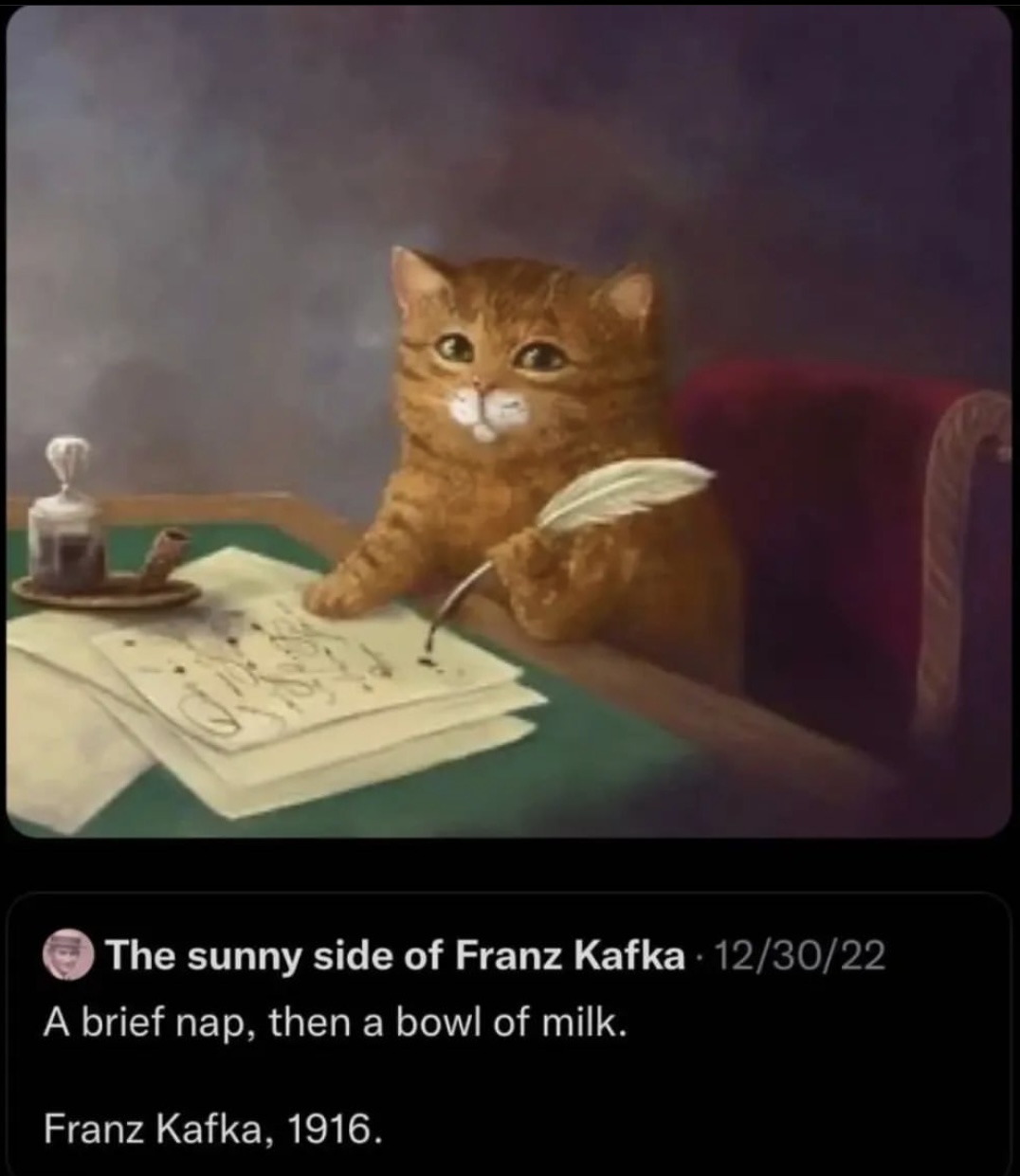
Alright, we’ve sketched out the rough concept of prudential value. But what actual things have prudential value? What things benefit us? What things are good for us in this sense? There are countless things that might come to mind: being healthy, having a sense of purpose in your life, a banana, money, taking a (brief) nap, drinking a bowl of milk, and so on. These all seem plausibly beneficial for us, right?
But what we really care about are the things that possess prudential value in themselves. Or, in other words, what possess prudential value intrinsically rather than instrumentally/derivatively. We can also say such things “directly” benefit us. Take “money” in the list above as an example. You typically value money because of something it allows you to obtain, say, the state of being self-sufficient rather than dependent. In this case, money possesses prudential value solely derivatively/instrumentally; it doesn’t benefit you directly; it’s value depends on/derives from the value the state of being self-sufficient has.
One way to test for intrinsicality is to consider whether the thing in question would still be valuable if none of its typical effects/consequences/reasons for doing so obtain. If hyper inflation suddenly rendered the money completely ineffective in making you able to provide for yourself, its value would likewise disappear, assuming it was solely in service of that and not another reason which remains, say, that you liked licking the coins the money consisted in.
Another method is the minimal pairs test: you imagine two scenarios that differ minimally, ideally only in the addition of the thing you are trying to evaluate the intrinsicality of, and then see which one seems to have higher value in the relevant sense. The idea behind this test is similar to the previous one, to see whether that thing changes the value of a scenario by itself. For example, we can use this to analyze whether “novelty” is an intrinsic prudential good. Take the following example: It’s a day like any other for Finkel (yet another one!). He’s taking the bus home after a tiring day at school. This time however, the bus unexpectedly takes a new route, exposing Finkel to new scenery. Finkel reaches home at the same time, happily jumps into bed to nap, and wakes up from his slumber never to remember anything about the route he took to get home. Life continues as normal. In the other case, everything is the same, except the bus takes the usual route. I’m inclined to think that the experience of novelty has done nothing to increase the prudential value of the scenario. It doesn’t seem like novelty, purely novelty, is something that directly benefits Finkel. We’ll explore examples similar to this in more depth later.
As a last note about intrinsicality, something can be both instrumentally and intrinsically valuable. Take knowledge, say, of how muscles grow. You might want that knowledge for its own sake and even if nothing else obtained, you’d still find it valuable, perhaps because you are just curious about it. But you might also want it instrumentally, so you can use it to get something else: larger muscles.
Why care about intrinsicality? Because we want the most fundamental account of what contains prudential value and why, abstracted away from specific, contingent details of a particular scenario, like whether hyperinflation has rendered money useless or not. As such, theories of prudential value are intimately concerned with what is intrinsically prudentially valuable: they aim to specify what things are intrinsically prudentially valuable and why they are so.
Prudential Value: The Subjective vs Objective Divide

There are many categorizations one can make for theories of prudential value, but there’s one that bifurcates different theories across one of the questions at the heart of value theory: whether value is subjective or objective.
In our case, restricted to prudential value, we can ask: are things prudentially valuable because we want them or do we want them because they are prudentially valuable?
The answer to this question marks the divide between objectivists and subjectivists about prudential value, just as they do regarding other types of value. Put simply, objectivists maintain that some things have prudential value regardless of whether we want, care, or have any sort of positive attitude about them; they have prudential value by virtue of their nature; they benefit us, make our lives better, and so on, independent of our attitude towards that thing. It could be that you want those things, but that’s only because your attitudes track the objective value of that thing, the objectivist maintains. Objectivists about prudential value would likewise maintain that even if you didn’t care, enjoy, desire, want, or have any positive attitude towards that thing, it would still benefit you.
Subjectivists about prudential value, on the other hand, maintain that the only things with prudential value are the things the subject has a positive attitude towards and, moreover, they have intrinsic prudential value BECAUSE of the subject’s positive attitude towards them, not just by virtue of their own nature. It’s very important to note the “BECAUSE” there. If the subjectivist wasn’t claiming that what makes something prudentially valuable was our positive attitude towards it, then the distinction between subjectivist and objectivist views collapses as the objectivist could simply say “sure, only what we have positive attitudes towards is prudentially valuable, because our positive attitudes merely track what is independently, objectively good.”
I lean pretty heavily towards subjectivism regarding prudential value. It’s difficult for me to get past the intuition that for something to be intrinsically good for me, I need to find it at least somewhat compelling, attractive, desire it, or, in other words, have some positive attitude towards it. I can’t see how I’m directly benefitted by what I completely and genuinely don’t care about.
- Note: remember, we are concerned with what has intrinsic prudential value. So a subjectivist can maintain that a subject may not have a positive attitude towards something that nonetheless still has prudential value. For example, Bob may dislike the taste of vegetables and not know anything about their health benefits, therefore leading him to have no positive attitude towards vegetables. Yet vegetables are still prudentially valuable for him because they lead to what he finds intrinsically prudentially valuable, his continued health - It’s just that he doesn’t know that. This is compatible with the subjectivist position. But for things that are seen as valuable for their own sake, the subjectivist maintains if they are so, they must be the object of a positive-attitude.
Let’s consider a few examples of things that many people, including myself, find intrinsically prudentially valuable. Friendship and knowledge seem like good candidates in that they seem valuable, at least in part, for their own sake and not solely to get something further. But would they be good for me even if i didn’t want them, desire them, like them, enjoy them, or care about them?
Consider, once again, Finkel. Finkel is at school, sitting in a foreign language class he’s required to take as part of the school’s curriculum. He has no interest in the language. He never plans on using it. The class is boring and takes away time from other things he could be doing. He finishes the class and learns some of the most important parts of the language, “Biblioteca = Library”. He never uses this knowledge, he never cares about it, he’s unaffected by it. On this basis he decides to intentionally forget it. Was this knowledge good for Finkel? Did it directly increase the prudential value of his life? I don’t see how it did.
Likewise with friendship, imagine a highly functioning autistic version of Finkel. He’s always liked to be alone and he doesn’t enjoy having friends. Anytime he spends with his friends he’d rather be alone doing whatever he likes doing. He only has friends because of social convention and, once he cuts all his relationships, he wonders why he didn’t do it earlier. Did Finkel benefit directly from his friendships? Did it directly increase the prudential value of his life at all? I’m putting emphasis on the “directly” here because his friendships may very well have been instrumentally prudentially valuable because they contributed to him getting something intrinsically prudentially valuable, say a larger rock collection (assume that it is so, for example’s sake…). I’m inclined to say no here as well.
An objectivist about prudential value that views those things as intrinsically prudentially valuable would have to maintain that, in both cases, said things were actually good for the subjects. And moreover, their position would entail that the subjects were making an evaluative mistake in breaking friendships or forgetting knowledge, such that, if they wanted to benefit themselves more, they shouldn’t have done what they did.
- there are some caveats to this as objectivist positions can be more nuanced.
You can do this with any thing that isn’t itself a positive attitude and I think i’d have the same intuition. The formalization of this intuition is what’s called the “resonance requirement”, roughly: something is prudentially valuable for some subject if and only if and because said subject has a pro-attitude towards it. By pro-attitude i mean any sort of positive attitude: desiring it, finding it pleasing, being happy about it, liking it, approving of it, aiming for it, valuing it, etc.
Objections to the Subjectivist View
There are challenges to this requirement, of course. Take the example of a sadist who strongly desires to do all sorts of heinous things, for their own sake, and lives a life successfully doing so: murders, torture, treachery, cruelty of all kinds. Furthermore, he has pro-attitudes towards nothing else that was stifled in the commission of such acts. According to the subjectivist position, those things, such as murder, are prudentially intrinsically valuable for him and, moreover, he lived a life very high in prudential value. That is to say, life went exceedingly well for him. An objectivist, on the other hand, who views, say, love, kindness, or moral virtue as objectively intrinsically prudentially valuable has the resources to be able to rate his life poorly on the axis of prudential value, which seems to match our intuitions.
In response to this challenge, it’s important to consider the general concept of prudential value fleshed out in the first section. I’m inclined to think that life did indeed go exceedingly well for the sadist and that those things are intrinsically prudentially valuable for him. But that doesn’t mean that his life was good. That doesn’t mean that his life was high in moral value. Sure, his life was manifestly immoral and worthy of censure, but it’s not clear that it was bad for him. A similar challenge to the subjectivist position can be brought up with respect to a subject who has pro-attitudes the objects of which are pointless and trivial, rather than immoral. Imagine a guy who just really, really desires to tap trees three times with his forehead. He designs his life around maximizing the satisfaction of that desire, to the extent of neglecting everything. The response here would be the same, bite the bullet on the prudential value of his life, while maintaining the ability to rate it in other ways.
That is to say, I think our intuitions about something being off about these lives can be explained by the poverty they demonstrate along other axes, not prudential value. Ultimately, the resonance requirement is too costly to my intuitions to give up, even if it leads to prima facie strange prudential endorsements of certain lives. We’ll look at the resonance requirement again in a later section.
Theories of Prudential Value
Theories of prudential value aim to specify what things are intrinsically prudentially valuable, why they are so, and howto calculate prudential value. The most common way to categorize them is to divide them into three families of theories: hedonistic, desire, and objective list theories. This categorization is quite confusing because it makes it seem like those distinctions are mutually exclusive, which, as we’ll see below, they are not.
IMO, a better way to think about the theories and classify them is based on, and in reference to, their relevant components
- The substantive component: what things are intrinsically prudentially valuable.
- The formal component: why things are intrinsically prudentially valuable (what the “Good-maker” is).
- The measurement component: how do we calculate the prudential value of a thing that is intrinsically prudentially valuable and of an entire life/life-segment.
Those are the main “components” of any theory, any of which can be tweaked to create a new theory. I’ll give some common examples of those components.
Substantive Component
- pleasure
- What pleasure means depends on the theory of pleasure…which can then produce multiple theories of prudential value
- sensations/feelings only (can include pleasure, but also other feelings)
- any object of our (relevant) desires.
- this could be mental states/experiences (like pleasure), it could be things outside of our minds, etc. Which desires specifically? Well that’s for the explanatory component to narrow down, if it all.
- Some list of things: Friendship, Knowledge, Achievement, that aren’t reducible to one thing
Formal Component:
- subjectivist: because the subject has some pro-attitude towards that thing. Which pro-attitude? Well that will produce different theories as well. But some common ones are listed below. Also, even after picking a type of pro-attitude, one can further restrict which ones within that type would be relevant, which can produce even more theories.
- desiring it
- theories that select this pro-attitude are called “desire” theories.
- valuing it
- aiming for it
- being pleased by it
- being happy about it
- desiring it
- objectivist: because of some fact about the thing that isn’t related to anyone’s attitudes:
- “it just is”(i.e., that the thing is intrinsically prudentially valuable is just a basic normative fact about value that has no further justification)
- It completes human nature according to some conception of human nature
- Some factual phenomenological aspect of it, perhaps the pleasantness of the thing (if the thing is pleasure, for example)
- Hybrid:
- Some combination of a pro-attitude + the objective prudential value of that thing
Measurement Component
- regarding the prudential value of a life/life segment
- Add up the prudential value of all the things within that segment
- consider the segment as a whole
- Regarding the prudential value of a thing that is intrinsically prudentially valuable
- if the thing is a desire: the strength of the desire
- if the thing is pleasure (on the sensation model of pleasure): the intensity and duration of the pleasure
In this way, it’s easy to see why the popular classification can be confusing. Consider “hedonistic” theories and “desire” theories. Supposedly these theories are different: one is somehow related to pleasure and one is somehow related to desire? Now, take a theory that posits the only thing that is intrinsically prudentially valuable is pleasure and that what makes it valuable is its pleasantness (some fact about its experiential quality). But, there may be another theory that is substantively the same in that it says pleasure is the only thing that is intrinsically prudentially valuable, but formallydifferent, in that it says pleasure is intrinsically prudentially valuable only because we desire it! Is that a hedonist or desire theory? I don’t know. Another issue is that the first theory has a formal component that makes no reference to the subject’s pro-attitudes. So it may even be an objective list theory with just one item on the list, pleasure! Furthermore, what pleasure even is will affect how one should classify that theory.
Nonetheless, if we can salvage some use out of the popular classifications, even knowing, as shown above, that the categories aren’t mutually exclusive, it would be this:
- Typically, when talking about “hedonistic” theories, one refers to theories that state pleasure is the only thing that is intrinsically prudentially valuable and that it is so because of some fact about it (either its phenomenal character or something external to it, like our attitudes towards it).
- When talking about “desire” theories, one typically refers to theories that state the objects of our (relevant) desires are the only things that are intrinsically prudentially valuable and what makes them so is because we desire them.
- When talking about “objective list” theories, one typically refers to theories that state there are things that are objectively prudentially valuable independent of anyone’s attitudes. There is no one description that can be given of their substantive component as each “list” will be different.
Which Theory or Theory Type Is Most Plausible?
As seen in previous sections, the methodology to determine the “plausibility” of a theory is essentially to see which theory does the most justice to our pre-theoretic notions of prudential value. Hence, the main tool is applying the theory to life, typically via analyzing paradigmatic examples that one would intuit the prudential value of easily, and seeing which theory best fits our intuitions about the prudential value of that scenario.
On an unrelated note, this sort of methodology is fascinating in that it surfaces the difficulty of formalizing and verbalizing what we already “know” on some level. That’s abundantly strange and annoying…it frustrates the all-important desire to define things! If I already know it on some level, which i do seem to, shouldn’t I be able to capture it with words easily? It’s part of the broader “I know it when i see it” phenomenon, which exposes the frustrating difficulty of robustly defining something as compared with the relative ease of being able to point out examples of it. I have a theory for why that is, but that’s for another post!
Continuing, which theory best fits our pre-theoretic notions of prudential value? I already mentioned the resonance requirement above, which I find to be a non-negotiable aspect of any plausible theory: something is prudentially valuable for some subject if and only if and because said subject has a pro-attitude towards it. This is a very popular intuition and undergirds all theories with a subjectivist formal component.
Objectivist Approaches
If one finds the resonance requirement compelling, as I do, any theory with a formal component that doesn’t take into account a subject’s pro-attitudes is out the window, which eliminates all objective list theories, as that is their defining feature, after all. Here are some of the things said to be intrinsically prudentially valuable in the objective list theories put forth by various philosophers
- Life, knowledge, play, aesthetic experience, sociability (friendship), practical reasonableness, religion.
- Achievement, friendship, happiness, pleasure, self-respect, virtue.
- Life, knowledge, aesthetic experience, excellence in play and work, excellence in agency, inner peace, friendship and community, religion, happiness.
- Moral goodness, rational activity, development of abilities, having children and being a good parent, knowledge, awareness of true beauty.
I don’t know what play is referring to, but they seem to like it…a lot? But anyway, the first thing you’ll notice is that all of the things on these lists are things that most people have a pro-attitude towards (i.e., they desire it) and plausibly do so for it’s own sake. So substantively, there may not actually be much of a difference between an instance of a subjectivist theory (say, a desire based theory) and an objective list theory. But formally, the explanation for why those things are valuable will be opposites. And of course, because of that, the people putting forward these lists must maintain that these things are always good for some subject (there are some caveats to this), which I find implausible as discussed in a previous section.
Interestingly, as alluded to in a previous section, commitment to the resonance requirement eliminates some hedonistic theories as well. Remember, that when referring to “hedonistic” theories we are referring to theories that state pleasure is the only thing that is intrinsically prudentially valuable and that it is so because of some fact about it. To see why the resonance requirement eliminates such a theory, we need to consider the different definitions of pleasure.
There are two models of pleasure: the sensory model and the attitudinal model. On the sensory model, pleasure is an experience, a distinct sensation separable from other sensations, which everything we deem “pleasurable” leads to (even intellectual “pleasures” like reading a book). This is thought to be implausible as there doesn’t seem to be a sensation like this that can be singled out. Indeed, our experience shows a stunning heterogeneity of sensations and not one “pleasure” sensation that they all lead to. The “pleasure” (if we want to call it that) from reading a book is different from the “pleasure” of eating an apple, which is different from…you get it. The more popular sensation theory claims that pleasure is something more abstract, a “feeling tone” that manifests differently in different experiences though the “tone” is shared. Another way to put the claim is that “there’s an intrinsic, unanalyzable quality of pleasantness which is present to a greater or lesser degree in all experiences”. On the other hand, in the attitudinal model of pleasure, an experience is not pleasurable by virtue of some phenomenal quality of it, but, rather, our attitudes towards that experience. Specifically, an experience is a pleasurable experience if we have a certain pro-attitude towards it (i.e., we desire it). In this way, pleasure isn’t some specific experience, it’s just whatever experience we have a pro-attitude towards.
Hence, if a hedonistic theory is using the sensation model of pleasure, it’s really just an objective list theory with one item on the list: pleasure. Why? Because on the sensational model, pleasure is just an experience, a sensation, and nothing about it requires a subject wanting it. So, such a theory implies that people who want, for example, to experience a period of contemplative thought instead of such sensations aren’t benefiting themselves at all, even if they want to be doing so, and are completely satisfied with their decision.
As such, a commitment to the resonance requirement renders a theory like this implausible just as it does for any objective list theory. There are other arguments against sensational hedonism, in that it returns counter-intuitive results in paradigmatic cases, but my main gripe with it is from a subjectivist angle due to the resonance requirement. Straightforwardly, though I want the sensation of pleasure (granting that the sensational model of pleasure is accurate, which is dubious), I also want other things that seem to make life go better for me. Sensational hedonism disagrees that getting those things will make life better for me. Just as there are other arguments against sensational hedonism, so too are there against objective list theories of all kinds and objectivism about prudential value more broadly, but for now, we’ll move on.
Subjectivist Approaches
If the resonance requirement is so important, why not just start with it? This is where subjectivist theories come into play, of which there are many: aim-achievement theories, value-realization theories, happiness theories, some forms of hedonism (attitudinal ones as i mentioned above). But one family of theories is by far the most popular, certainly amongst subjective families, but possibly even amongst all theories of prudential value: desire theories.
Desire theories, and especially specific ones, are what I also find to be most plausible as theories of prudential value. What unites desire theories is the claim that the only things that are intrinsically prudentially valuable are the objects of our desires and that they are so because of our desires. What differentiates desire theories from each other is which desires they consider relevant and how they calculate prudential value.
Other subjectivist theories have promise, given their selection of pro-attitudes, but they may constrain what is prudentially valuable too much. Take aim-achievement theories. Something is an aim if you intend to take some action to make it the case. Hence, not all desires are aims. For example, I may intrinsically desire that my friend pass his test and knowledge of him doing so may plausibly make me better off, but i don’t intend to take action to make it so. A similar issue is present with value-realization theories (depending on what valuing means, to be fair), where something may not have a connection with my “values” despite still being desirable. Thus, at least in some cases, such theories imply I don’t benefit at all when it seems like I do, a fault that isn’t there for desire theories.
Furthermore, to have something as an aim or to value it means that you likely desire it as well. So, desire theories can substantively subsume the other subjectivist theories, though formally they may differ. This broadness is both a benefit and a drawback to desire theories, as we’ll see. It seems, then, being always present with other pro-attitudes yet being broader in scope, desires are the pro-attitude best positioned to capture the general ethos of the subjectivist position. To them we now turn.
Desire Theories
As mentioned above, desire theories are a family of theories, of which the siblings are differentiated based on which desires are considered relevant to prudential value and how prudential value is calculated. The process of figuring out which set of desires to include in our theory is best illustrated through refining the theory in response to various challenges. We’ll start off with a very simple version that we’ll call the desire fulfillment theory (DFT).
Here’s a rough exposition of its relevant parts
DFT: Something is intrinsically prudentially valuable if and only if and because it fulfills a desire of yours. How prudentially valuable something is depends on the strength of the desire it fulfills. The prudential value of a life or life segment is based on balance of desire satisfaction vs desire frustration within it.
To couch it in terminology we used before, we can say that such a theory’s substantive claim is that only the objects of our desires are intrinsically prudentially valuable and that its formal claim is that they are so because of our desires. Note that the objects of our desires can be anything: mental states, states of the world, etc.
This version doesn’t actually seem plausible. Consider the following: I desire to walk to the kitchen only because I desire to eat the banana ostensibly on the counter. Fulfilling the first desire by itself seems useless if the second isn’t also fulfilled. How am I benefitted if I walk into the kitchen and there is no banana, given that was the only reason I walked into the kitchen? A very straightforward solution to this is to simply restrict the set of desires considered relevant to only contain intrinsic desires. On this restriction, the relevant desire is the intrinsic desire of wanting a banana (or, say, suppressing my hunger) and since it wasn’t fulfilled, I received no benefit. Solely instrumental desires (such as walking to the kitchen) are thus irrelevant. So we can move now to intrinsic DFT, we’ll call it IDFT.
What about ill-informed desires? Consider my intrinsic desire to suppress my hunger by the instrumental desire of eating an apple. Unbeknownst to me, the apple has that ever-elusive worm in it, which consuming would cause me to be violently sick. Doesn’t our desire theory, against all reason, say that me suppressing my hunger is good for me? The common response to this is to move to an “idealized” form of the theory where only the desires that one would have if they were fully informed count. On such a version, the desire to suppress my hunger wouldn’t benefit me because it’s something I wouldn’t have if I was fully informed. Simple enough, right? First of all, I think this move is unnecessary as ill soon detail. But moreover, while it is useful in this case, it introduces a level of alienation to what supposedly benefits me that i took up the subjectivist position to avoid! Recall that objectivist theories posit that there are things that are good for me, regardless of how i felt about them. Idealization does something similar because the fully informed version of me may be drastically different and have desires that present me just doesn’t care about at all, may even dislike, and so on. An idealized desire theory would counterintuitively imply that those things are good for me, like an objectivist theory would, in violation of the resonance requirement. There are ways around that issue, but it suffices to say that idealization is a very costly move when the current theory already has the resources to deal with this. To see how, we need to differentiate between satisfying the intrinsic desire being good for me in itself and being good for me, all things considered. Satisfying my intrinsic desire of suppressing my hunger IS intrinsically good for me (after all, i’m no longer hungry!) but it’s not good for me overall given the effects of satisfying it lead to so much desire frustration (of being healthy, of not feeling pain, etc). So the current theory accurately predicts the drop in prudential value of my life as a result of satisfying that desire, while not needing to be modified.
Another concern comes from the idea of remote desires. The common charge is that since your desires can have as “their object spatially and temporally remote states of affairs, the satisfaction of many of them will occur at times and places too remote to have any effect on you”. A common example in the literature is as follows: You meet a stranger who has some terrible disease and, being a sympathetic person, you strongly intrinsically desire that this stranger is cured. You then go your separate ways and unbeknownst to you, the stranger is later cured. The charge is that DFT would say that somehow you are benefited and that’s absurd. Indeed, that is absurd! Here, we should once again restrict desires, this time to ones that you actually experience the fulfillment of. There are more complicated ways around the issue of remote desires, like developing a concept of “self-regarding” desires (desires which “affect/concern” you) and restricting the considered desires to that only, but that comes with a whole host of issues. So we now tack on the experience requirement and are thus at experienced IDFT, or EIDFT.
What about immoral, pointless, or trivial intrinsic desires (that the satisfaction of does not lead to prudential disvalue later)? Is satisfying them also good for the subject? I discuss something similar in the “challenges to the subjectivist view” section with the example of the sadist and my response here is the same: bite the bullet, acknowledge the prudential value of those desires being satisfied, and note that our intuition are well served by the ability to rate the satisfaction of those desires on other scales, such as moral value, meaningfulness, beauty, whatever.
Another charge against DFT is that it logically excludes the possibility of an informed subject being able to act altruistically or self-sacrifice. Or, to generalize, the claim is that DFT entails the logically impossibility of a relevantly informed subject doing something that doesn’t maximize prudential value. The argument, put very roughly, is as follows:
- we only do what we most desire, as a basic psychological/motivational fact
- DFT implies, if fully informed, what we most desire is best for us
- therefore, a fully informed subject is always doing what’s best for himself.
It’s important to note the “informed” qualifier. Proponents of this argument are not making the claim that DFT always entails the impossibility of not maximizing prudential value. For example they would agree that a subject can do what they most desire (e.g., eat the apple that they didn’t know had a worm in it) and be worse off because they didn’t have full information. An example that demonstrates what they are arguing is as follows: Take a subject, S, that hugs a suicide bomber to absorb the blast and save others in the crowd. What S most desired was to hug the suicide bomber, sacrifice himself, and save others. S knew he was going to die, so he was fully informed. S got what he desired. Or, take a less dramatic example, where S knows if he doesn’t go to the doctor this one time he’s going to develop a terrible disease but he’s lazy and desires to stay home and does so.
Doesn’t DFT strangely imply that, in both scenarios, S maximized prudential value, did what was best for himself, and so on? It is strange indeed that sacrificing yourself or (seemingly) irrationally committing yourself to a terrible disease is acting in your best interests. But DFT doesn’t actually imply that. In both cases, sure, S satisfied his strongest present desires which our DFT must admit is at least somewhat good for him, in his self interest, and has prudential value. But, our DFT also maintains it’s not good for him overall. It’s not in his best interest. The actions don’t maximize prudential value. This is because, in the first case, he’s ended his life and deprived himself of so much desire satisfaction, with the only positive being that one desire satisfied presently. Likewise, in the second one, his action will result in immense desire frustrations due to being terribly sick which outweigh the one, present desire satisfaction of staying at home. That is to say, a subject can bring about their most preferred outcome, but that outcome can have less desire satisfaction in it than another outcome. Indeed, even a fully informed subject can presently desire an outcome with less desire-satisfaction for themselves, for something else, say, moral value.
Much, much more can be said about desire theories, challenges posed to them, other theories, and the broader concept of prudential value itself. But, this’ll do for now.
Is Any of This Relevant?
Despite the apparent practical significance of the question “what’s good for me?” and of the broader subject matter of prudential value, this endeavor of formalizing it and considering various theories elucidating aspects of it isn’t practical. By this I mean that it doesn’t affect change at the level of my actions and intentions.
To be clear, I think prudential value is a coherent concept, has utility in ethics and beyond, and that certain theories, such as the specific desire theory I detailed above, are at least plausible with respect to their aims. But, ultimately, they are descriptions: they aim to merely fit some aspect of our lives, rather than guide it. This is evident in the methodology used in investigating prudential value, that of attempting to achieve parity with pre-theoretic notions/intuitions rather than “discover” what is beyond us. What’s interesting, and why I care at all about this, is not specifically, or only, prudential value but rather the general space the concept is embedded in: What is value? How do we justify evaluative beliefs? What are different ways we evaluate? What grounds the objectivity of values, if they even are so? How does it relate to our actions and what we have reason to do? How do normative reasons motivate? What “justifies” actions? What does a completely “rational” actor do? Why do we act at all? This is just a sample of a few questions. There are so, so many more. In this sense, the investigation into prudential value is a small piece of a larger sensemaking endeavor.
A Final Judgement
So what can be said about the grass counter’s life? I’m inclined to think that it’s going exceedingly well for him…But how does that relate to whether he’s justified in picking it? How does that relate to what he has reason to do, all things considered? These are questions for another day. For now, we leave the various Finkels behind.
Sources
- The Oxford Handbook of Value Theory
- Handbook of Value: Perspectives from Economics, Neuroscience, Philosophy, Psychology and Sociology
- The Routledge Handbook of Philosophy of Well-Being
- The Philosophy of Well-Being: An Introduction
- https://plato.stanford.edu/entries/well-being/
- https://spot.colorado.edu/~heathwoo/PSS.pdf
- https://philpapers.org/archive/MARADO-16.pdf
- https://spot.colorado.edu/~heathwoo/PDD.pdf
- https://spot.colorado.edu/~heathwoo/WDARWB.pdf
- https://spot.colorado.edu/~heathwoo/DSH.pdf